
Budget 2027 offers a €1,000 bonus to some workers while making life more expensive for tourists and many foreign workers. The political arithmetic deserves scrutiny.
The €1,000 super bonus was one of the headline promises of the election campaign. Budget 2027 delivers it. Eligible workers will receive a tax-free payment of up to €1,000, with the full amount going to those who earned at least €12,000 from employment in 2025.
There is nothing inherently wrong with giving workers money. People are entitled to benefit from economic growth, and governments can reasonably choose to put money into their pockets.
But look at the Budget alongside its other major measures and a question emerges. Who gets the bonus, who gets the bill, and who has the power to punish the Government at the ballot box?
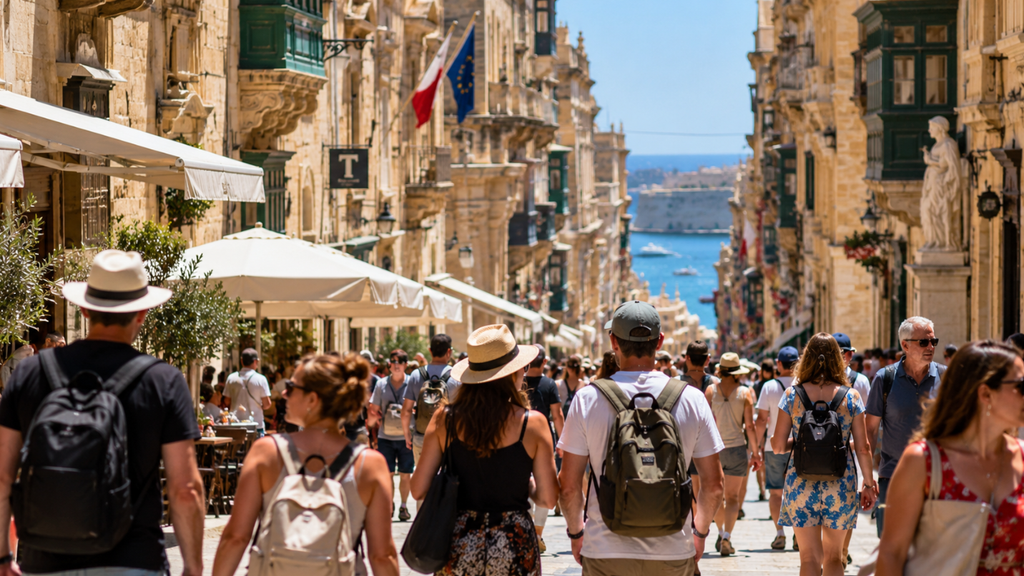
Tourists will pay substantially more to stay in Malta. From January, the eco-contribution will rise to €8 per person per night in collective accommodation and €10 in short-let apartments, subject to a cap. Cruise passengers and visitors to Comino will also face new charges.
Meanwhile, many third-country nationals will have to pay more to work and live here. Work-permit application fees are rising from €600 to €800, with a new €400 annual infrastructure contribution. Those who do not qualify as long-term residents will lose access to free public transport and, for new registrations, free childcare. Other restrictions also apply.
The super bonus is expected to cost around €200 million annually. The Government says the new charges on third-country nationals will generate additional revenue and savings. These are different measures with different purposes, and the figures should not be treated as though every euro collected from one group directly finances a payment to another. But their juxtaposition is politically revealing.
The people receiving the bonus are part of the electorate the Government must persuade and retain. Tourists cannot vote in a Maltese general election. Third-country nationals who are not Maltese citizens cannot vote in one either.
They pay, but they do not vote.
That does not prove that the Government designed the Budget to appease anti-immigrant voters. Political motives cannot be established simply by placing two policies side by side. But the distribution of benefits and burdens raises a legitimate question: is the Government pursuing a coherent economic strategy, or is it easier to demonstrate toughness by charging people who cannot retaliate at the ballot box?
After thirteen years of rapid population growth, the Government has every reason to review migration policy. Employers must respect the law. Exploitation should be pursued. Recruitment should reflect genuine economic needs. Infrastructure must keep pace with the population. Tourism must contribute fairly to the costs it creates.
But making legal workers poorer is not, by itself, responsible migration policy. Nor is raising tourist charges a substitute for a serious plan to manage visitor numbers, protect local communities and improve the tourism product.
The Government has presided over an economic model that relies heavily on tourism and foreign labour. Businesses recruited workers to meet demand; successive administrations celebrated growth and rising revenues. The resulting pressures on housing, roads, public services and the environment were not unforeseeable.
Now the Government is changing the terms, and those who have little political influence are being asked to absorb a significant share of the adjustment.
There is a fair argument that public benefits should depend on residence status, that tourists should pay towards infrastructure, and that workers should contribute to the cost of services they use. But fairness requires more than announcing a charge. It requires explaining how the amount was calculated, why the burden falls on that group, and what measurable improvement the money will deliver.
The same standard should apply to the super bonus. If the Government can afford a substantial payment to eligible workers, it should be transparent about the long-term cost and explain how the measure fits into a sustainable fiscal strategy. A popular promise is not automatically a bad policy; nor does its popularity make it immune from scrutiny.
The real test is consistency. If migration needs to be better managed, enforce the rules and hold employers accountable. If tourism is putting pressure on infrastructure, manage that pressure and invest the revenue where it is needed. If workers deserve a share of prosperity, make sure the economy is creating sustainable value rather than simply expanding through more people and more visitors.
A Budget should be more than a calculation of who can be rewarded and who can be charged with the least electoral risk.
The super bonus may put money into voters’ pockets. The new charges may bring money into the Treasury. But neither, on its own, proves that Malta is being better governed.
And when the people being asked to pay more are precisely those who cannot vote the Government out, it is reasonable to ask whether the policy is guided by sound principles—or by the arithmetic of power.
Sources