
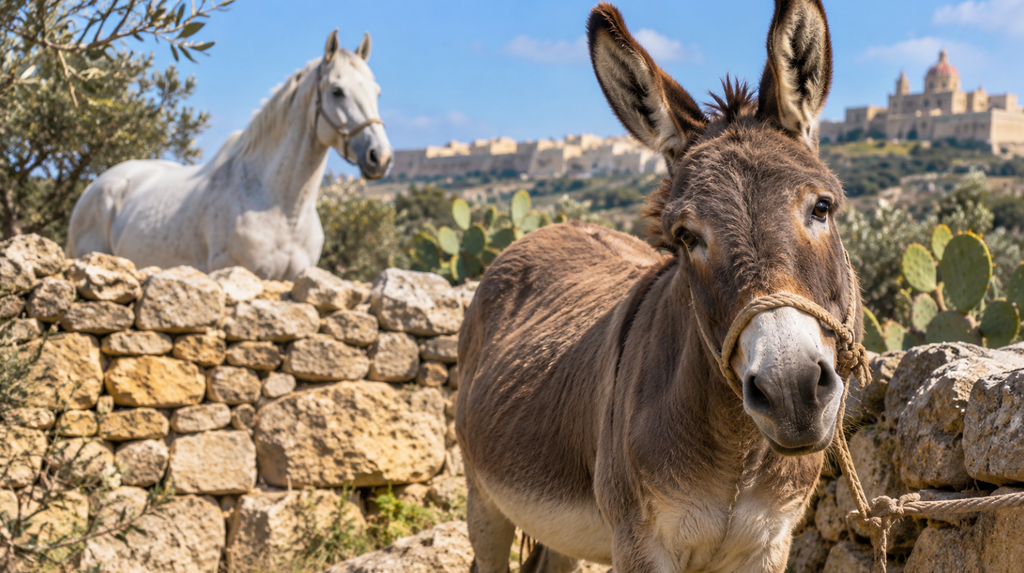
There is a Maltese expression for situations in which someone is led to expect one thing, only to be presented with something quite different: Jurik id-debba, iqabżek il-ħmara.
It is difficult to find a more appropriate description of the Government’s handling of the new tourist eco-contribution.
When Finance Minister Clyde Caruana announced the substantial increase in the levy in Budget 2027, the justification was presented as a matter of improving Malta’s tourism product. With visitor numbers exceeding 4.5 million and overnight stays approaching 28 million, the argument was that tourism was placing increasing pressure on national infrastructure and that visitors should contribute more towards addressing it.
There was also a wider policy message. Malta needed to improve the quality of its tourism offering, manage the pressures created by mass tourism and move towards attracting visitors who contribute more to the economy rather than simply increasing arrival numbers.
Fair enough. There is a perfectly legitimate argument for asking visitors to contribute towards the infrastructure and public spaces they use. Tourism is not cost-free, and its economic benefits should not blind us to the demands it places on the country.
But now comes the rather inconvenient clarification.
Asked by The Malta Independent on how the additional revenue would be used, Caruana acknowledged that while some funds would be redirected towards the tourism sector, a substantial part would go directly into government coffers.
In other words, the money collected under the banner of an environmental contribution, justified partly through the need to improve the tourism product, will not necessarily be reinvested in either the environment or tourism.
That is quite a change in emphasis.
The figures make the situation even more interesting. The revised accommodation contribution is expected to generate approximately €182 million. When the additional tourism-related charges are included, projected revenue reaches €214 million. The annual cost of Labour’s €1,000 Super Bonus is estimated at approximately €200 million.
MaltaToday has reported, citing sources close to the discussions, that the original intention was to increase the eco-contribution to around €5 or €6, but that the rate was pushed higher following the Prime Minister’s insistence that the Super Bonus be paid in full. This has not been officially confirmed as the reason for the final rates, and the Government has not formally earmarked the eco-contribution for the bonus. Nevertheless, the proximity of the figures, and the Finance Minister’s admission about the destination of the revenue, raise legitimate questions that deserve straightforward answers.
Let us be clear. There is nothing inherently wrong with raising taxes to finance government expenditure. Nor is there anything wrong with paying workers a bonus, if the Government believes it is justified and can afford it. But there is something fundamentally wrong with presenting a tax increase as a contribution towards improving tourism and the environment, only to subsequently explain that a substantial portion will be absorbed into general government revenue.
If this is a general tax increase, call it one. Do not sell it to the public as an environmental measure and then become vague about where the proceeds will go.
The Government’s own official guidance on the accommodation contribution states that its revenue is directed towards upgrading infrastructure in tourist areas and improving the quality of the tourism value chain. That is not an incidental detail. It is the stated purpose of the levy. The public is entitled to expect consistency between that commitment and the way the money is ultimately spent.
There is another uncomfortable contradiction. The Government says it wants to move towards higher-quality tourism, yet continues to encourage an expansion in accommodation capacity without having convincingly explained how that growth fits within the country’s infrastructure, environmental and social limits. Raising the cost of a holiday does not, by itself, attract a better class of tourist. Nor does it automatically improve the product being sold.
A visitor paying €10 a night instead of €1.50 is not necessarily receiving a better experience. That improvement has to be delivered.
The Government should publish a transparent breakdown of the projected revenue, identify how much will actually be invested in tourism infrastructure and environmental improvements, and explain precisely what the remainder will finance. If the additional revenue is intended to support general expenditure, taxpayers and visitors should be told so openly.
We cannot keep dressing up ordinary taxation in attractive labels and expect nobody to notice the difference.
The Maltese have a rather colourful way of describing this sort of thing. We were shown the mare. We were promised better tourism, improved infrastructure and environmental investment. Now we are being asked to jump the donkey.
And the Government should not be surprised if people start asking where the mare went.
Sources
The Malta Independent – Caruana says a substantial part of increased tourism taxes will go to government coffers
MaltaToday – Super bonus drove higher tourist tax increase
MaltaToday – Tourist tax hikes expected to raise €214 million, covering Labour’s super bonus
Malta Tax and Customs Administration – Environmental Contribution on Accommodation: stated purpose and framework
The Malta Independent – Budget 2027: Higher eco-contributions for tourists staying in Malta, visiting Comino