
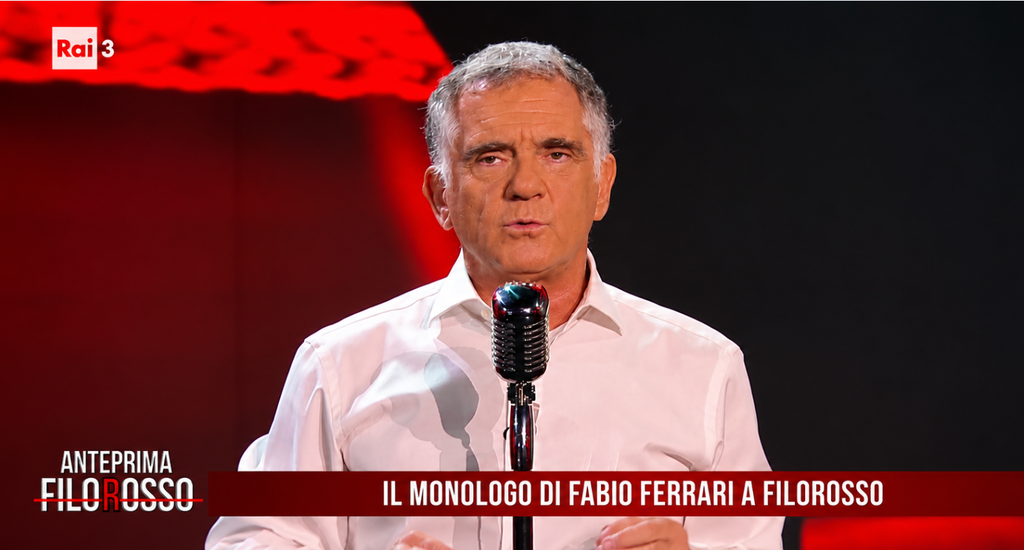
Italian actor Fabio Ferrari’s recent monologue on “dirittismo” strikes a nerve because it exposes a growing imbalance in European society: the demand to be entitled to everything, coupled with an unwillingness to accept responsibility for anything. Malta is not immune.
“Uno spettro si aggira per l’Europa” – a spectre is haunting Europe.
This time, it is not communism. It is dirittismo: the belief that every desire can be elevated into a right, every frustration transformed into a grievance and every personal demand presented as somebody else’s obligation.
Actor Fabio Ferrari’s recent monologue on Italian television, Il diritto dei teppisti, has struck a nerve because it articulates something many people feel but struggle to express. His argument is deliberately provocative. He contrasts those who damage property in the name of their rights with ordinary workers who get up before dawn, fulfil their obligations and ask for little more than the chance to earn an honest living.
His point is not that people should have fewer rights. It is that rights divorced from responsibility become a form of moral accounting in which somebody else is invariably expected to pay.
And that is a conversation Europe needs to have.
The language of rights has become central to modern political life, as it should be. Freedom of expression, equality before the law, access to justice and protection from discrimination are not luxuries. They are achievements of civilisation, hard-won and worth defending.
But somewhere along the way, the distinction between a right and a wish has become blurred. The right to seek employment becomes an entitlement to a job. The right to housing becomes a demand that somebody else must provide a home. The right to protest becomes, in some minds, a licence to intimidate, vandalise or disrupt the lives of people who have done nothing wrong.
These are not equivalent things.
A right to equal treatment does not guarantee a particular outcome. A right to protest does not confer a right to smash a shop window. Freedom of expression does not mean freedom from criticism. Social solidarity does not mean that the obligations of one person can be casually transferred to another without limit or explanation.
A society cannot remain free if every individual demand becomes a collective bill and every personal grievance becomes a public obligation.
Ferrari’s contrast between the rioter and the lorry driver is particularly effective. One destroys property in the name of protest; the other works long hours, pays his bills and delivers the goods on which society depends. The contrast is not a claim that every protester is irresponsible or every worker is virtuous. Peaceful protest has an honourable place in democracy, and workers themselves have often had to fight for rights that employers and governments were reluctant to recognise.
The point is simpler: the legitimacy of a grievance does not excuse every method used to express it.
Europe is wrestling with this tension in different forms – public disorder, polarised political debate, resentment over economic insecurity and arguments about the limits of individual freedom. It would be simplistic to blame all of this on an excess of rights. Poor governance, inequality, unaffordable housing and a loss of faith in political institutions are real problems. Governments cannot lecture people about responsibility while evading their own.
But neither can legitimate grievances become a universal exemption from personal responsibility.
And Malta? We should resist the comforting temptation to assume that this is somebody else’s problem.
We have our own arguments about public disorder, the treatment of public spaces, the responsibilities of citizens and the obligations of the state. The disorder surrounding the Freedom Street festival in September, when videos showed people climbing over the counter of a St Julian’s KFC restaurant and helping themselves to food, prompted calls for a police investigation. It was a reminder that conduct cannot be excused simply because an event is popular or those involved consider themselves entitled to have a good time.
At the same time, the principle must apply upwards as well as downwards. Citizens must respect the law, but governments must do the same. Those who demand responsible behaviour from the public must demonstrate responsibility in the use of public money, the exercise of authority and the enforcement of rules. Otherwise, the sermon will sound less like civic principle and more like hypocrisy.
That is where the debate becomes important for Malta. We cannot build a functioning society on rights alone, nor on duties imposed selectively. The citizen who pays taxes, obeys the law and works hard must not be treated as a convenient source of revenue while those who break the rules escape consequences. Equally, the vulnerable must not be denied legitimate rights simply because others abuse the language of entitlement.
Rights and duties are not enemies. They sustain one another.
The real danger of dirittismo is not that people ask too much of the state. It is that we lose sight of the reciprocal obligations that make any demand for justice sustainable. We begin to see society as a collection of competing claims rather than a shared undertaking in which freedom requires restraint, solidarity requires contribution and authority requires accountability.
A mature society does not ask people to surrender their rights. It asks them to understand what those rights mean — and what they do not excuse.
Europe has spent generations learning how to protect the individual from the arbitrary power of the state. It must not now forget that a free society also depends on individuals willing to accept responsibility for their own conduct.
The question is not whether we have too many rights. It is whether we still understand that freedom without responsibility is not the fullest expression of liberty. It is the beginning of its decay.
Sources
- StrettoWeb – Fabio Ferrari’s monologue, “Il diritto dei teppisti”
- Times of Malta – Disorder at the Freedom Street festival in St Julian’s
- Constitution of Malta – Article 42, freedom of peaceful assembly and association
- European Parliament – Eurobarometer findings on Europeans’ concerns and priorities