
There is a particular Maltese talent for confusing local importance with universal significance. We cultivate it in politics, in public administration and, occasionally, in the grand announcements of institutions that seem to believe the rest of the world is waiting to hear about their latest achievement.
The recent trip to Rome by more than 60 mayors and regional presidents provides a rather entertaining illustration.
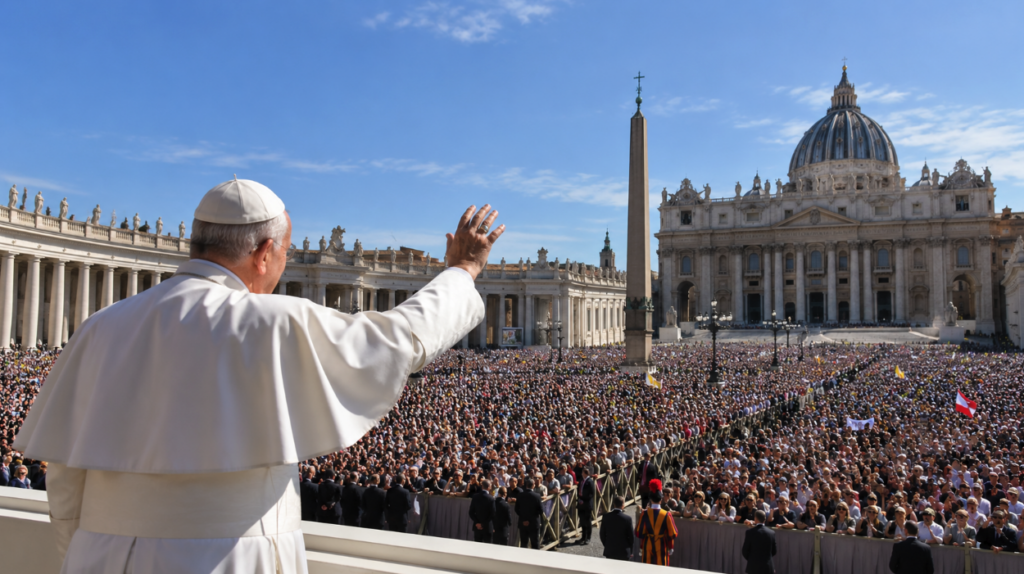
The delegation was reportedly expecting a private audience with Pope Leo XIV. The meeting was included in the programme, but it never materialised. The disappointment was palpable, with some mayors expressing their frustration and the Local Councils Association seeking an explanation.
If the audience had been formally promised, asking why it did not happen is perfectly reasonable. Organisers should be accountable for what they arrange and announce. Nobody is suggesting that public representatives should simply accept a broken commitment without question.
But there is a larger question that deserves asking: why was this encounter invested with so much importance in the first place?
The fanfare surrounding the visit, the prominence given to the anticipated papal audience and the subsequent public expressions of disappointment all suggest an institution rather too impressed by the prospect of being received by someone famous.
And here, perhaps, lies the real story.
In Malta, a mayor occupies a position of considerable local visibility. He or she is a public figure, a familiar face, someone who can command attention at a village feast, an inauguration or a press conference. In the small pond of Maltese public life, local representatives can become accustomed to being treated as important people.
Then they travel to Rome.
Suddenly, the familiar hierarchy disappears. The Pope is not another dignitary at a local council reception, nor is the Vatican an extension of the Maltese political circuit. The head of the Catholic Church has a global ministry, responsibilities extending across continents and a schedule that does not revolve around the expectations of a delegation from a small Mediterranean island.
The uncomfortable discovery is that importance is relative. A person can be a big fish in a very small pond and discover, upon entering the ocean, that he is a rather small fish indeed.
There is nothing particularly humiliating about that. Most of us occupy a modest place in the wider scheme of things. The problem begins when we become so accustomed to our local standing that we mistake it for international significance.
This is not a criticism of local government itself. Local councils matter. They are closest to the people they serve and deal with the everyday concerns that can make a tangible difference to residents’ lives. A competent mayor who improves local services, maintains public spaces and represents a community effectively deserves far more respect than one who collects photographs with prominent personalities.
Which makes the apparent hierarchy of priorities all the more curious.
What, exactly, was the achievement supposed to be? The opportunity to discuss matters of substance with the Pope? A chance to represent Maltese communities before an international figure? Or simply the distinction of being able to announce that the Pope had received them?
These are not the same thing. If the visit had a serious civic or charitable purpose, its value should not depend on whether a private audience took place. If its crowning achievement was a photograph with the Pope, then perhaps the institution had misunderstood what makes a public visit worthwhile.
There is an old distinction between being important and being seen with important people. Our political culture too often confuses the two. Access becomes a trophy; proximity becomes prestige; and the announcement of an encounter begins to matter more than what might actually be accomplished through it.
The mayors may well deserve an explanation for the cancelled meeting. But the public deserves something more useful from its local representatives than a demonstration of wounded institutional pride.
At home, they may be big fish in a small pond. In Rome, they discovered the ocean – and, perhaps, the limits of their own importance.
The lesson is not that Maltese mayors should know their place. It is that public office should give them a sense of responsibility, not an inflated sense of self.
A mayor’s standing should be measured by what happens in the town hall, not by who lets him into the photograph.
Source
Times of Malta – Mayors disappointed after missing meeting with Pope Leo XIV